
Log In
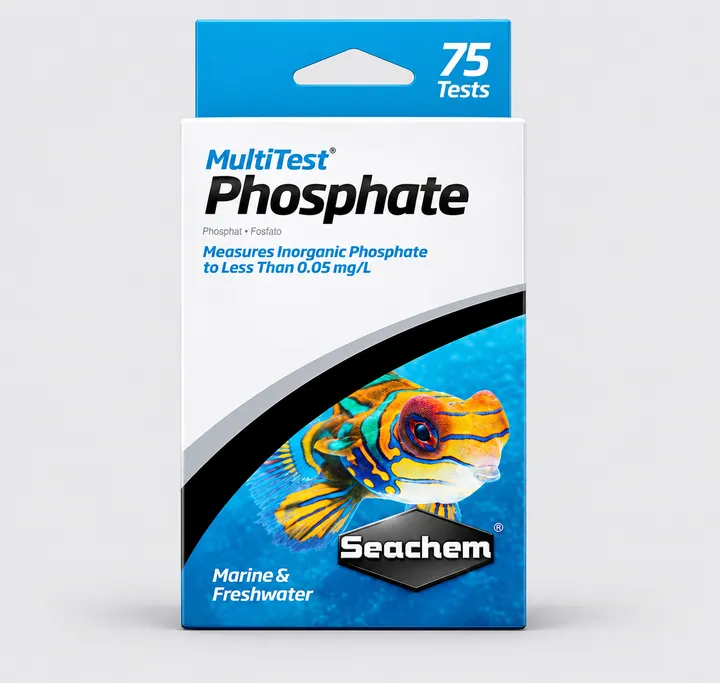
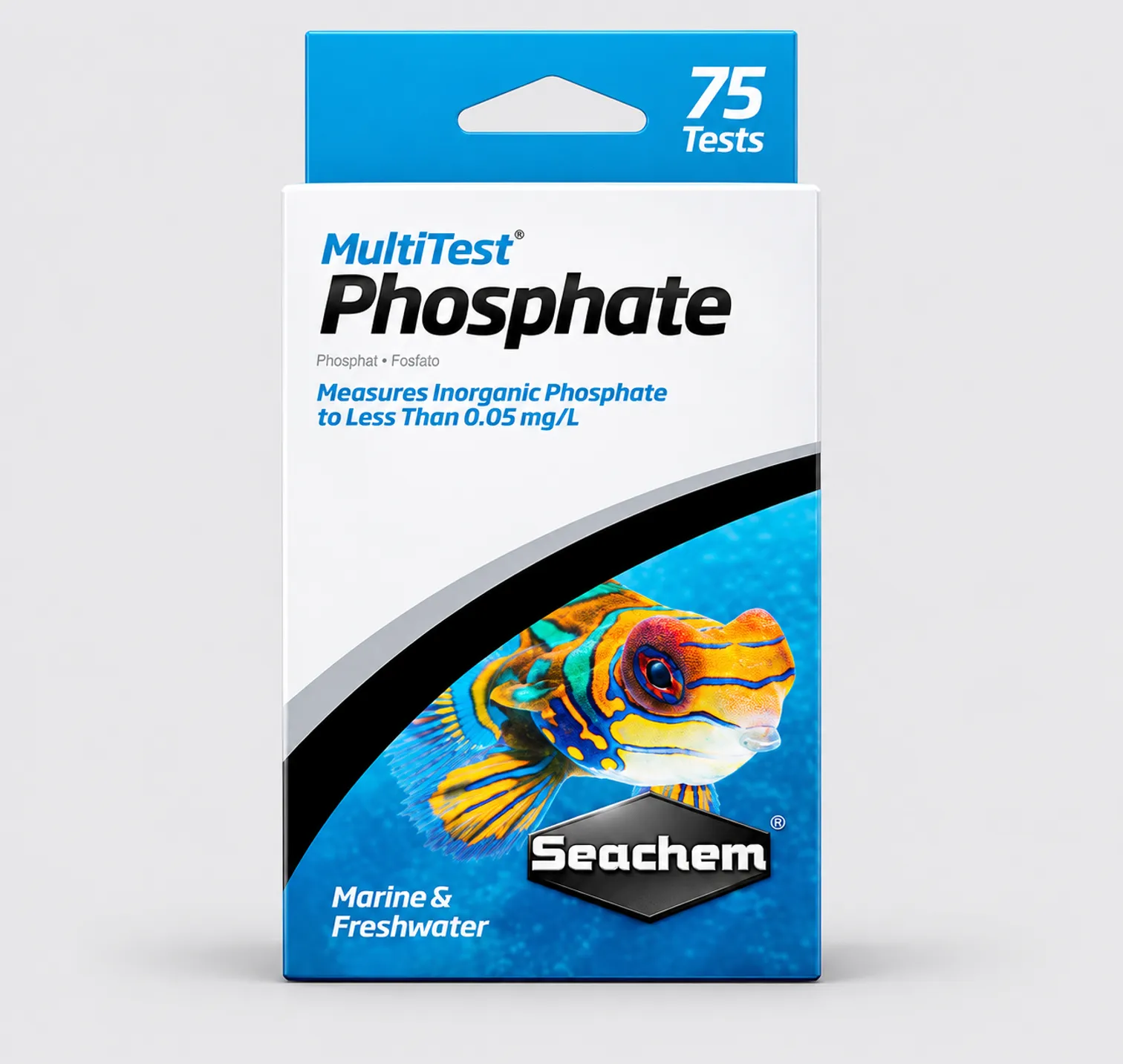
Seachem MultiTest Phosphate
Secure Checkout
Free Shipping*
Expert Support
Quality Guaranteed
7-Day Easy Returns. View Policy
Product Details
Description
Seachem MultiTest Phosphate Test Kit – 75 Tests | High-Sensitivity PO₄ Testing for Freshwater, Planted & Reef Aquariums
Product Description
Monitor phosphate levels and maintain balanced aquarium water conditions with Seachem MultiTest Phosphate, a professional aquarium phosphate (PO₄) water testing kit designed to measure inorganic phosphate concentrations in freshwater, marine, and reef aquariums.
Buy Seachem MultiTest Phosphate Test Kit Online in India at Aquatik Angels – Your Trusted Online Aquarium & Aquascaping Store in India and Chennai.
Manufactured by Seachem Laboratories, MultiTest Phosphate is a high-sensitivity aquarium testing kit that helps aquarists evaluate nutrient accumulation, manage aquarium fertilization, and monitor phosphate concentrations in aquatic environments.
Phosphate is an essential nutrient required by aquatic plants, algae, and other living organisms. However, excessive phosphate accumulation, particularly alongside elevated nutrients and suitable lighting, can contribute to unwanted algae growth and nutrient imbalances.
In reef aquariums, monitoring phosphate is particularly important because excessive concentrations can affect coral calcification and the overall nutrient balance of the reef ecosystem.
Seachem MultiTest Phosphate measures inorganic phosphate concentrations between 0 and 3.0 mg/L, with sensitivity below 0.05 mg/L.
The kit uses a distinctive yellow-green-blue colour-changing chemical reaction to indicate phosphate concentrations, making results convenient to interpret using the supplied colour chart.
Its specialized testing system is suitable for identifying low phosphate concentrations that are particularly relevant to reef aquarium maintenance.
With over 75 tests, a six-cavity testing plate, reference sample, colour chart, and dedicated testing reagents, Seachem MultiTest Phosphate supports accurate and repeatable aquarium water-quality monitoring.
The kit can be used in freshwater planted aquariums, marine fish-only systems, reef aquariums, aquascaping displays, and professional aquarium maintenance applications.
Whether monitoring reef nutrients, evaluating phosphate accumulation, or checking nutrient availability in planted aquariums, Seachem MultiTest Phosphate provides valuable information for informed aquarium management.
Key Features & Benefits
1. High-Sensitivity Phosphate Testing
Measures inorganic phosphate (PO₄) in aquarium water with sensitivity below 0.05 mg/L.
2. Over 75 Tests
Provides extensive testing capacity for repeated aquarium water-quality checks.
3. Wide Phosphate Measurement Range
Measures phosphate concentrations from 0–3.0 mg/L.
4. Sensitive Colour Chart
Provides detectable colour changes across low phosphate concentrations.
5. Distinctive Colour-Changing Reagents
Uses a yellow-green-blue reaction for convenient visual interpretation.
6. Freshwater & Marine Compatibility
Suitable for freshwater, saltwater, and reef aquariums.
7. Reef Aquarium Nutrient Monitoring
Helps reef keepers monitor an important parameter affecting coral aquarium nutrient management.
8. Planted Aquarium Nutrient Management
Supports monitoring of phosphate availability for aquatic plants.
9. Algae Management Support
Helps identify elevated phosphate levels that may contribute to unwanted algae growth.
10. Reference Sample Included
Allows users to verify test performance against a sample of known phosphate concentration.
11. Six-Cavity Testing Plate
Supports simultaneous testing of up to six aquarium water samples.
12. Easy-to-Read Colour Chart
Includes a viewing window that helps isolate sample colour and improve visual interpretation.
13. Water-Change Planning
Phosphate measurements help aquarists evaluate nutrient-management practices.
14. Fertilizer Monitoring
Useful for checking phosphate concentrations in aquariums receiving phosphorus-containing fertilizers.
15. Professional Aquarium Maintenance
Suitable for regular nutrient testing in freshwater and marine aquarium systems.
Technical Specifications
| Specification | Details |
|---|---|
| Brand | Seachem |
| Manufacturer | Seachem Laboratories |
| Product Name | MultiTest Phosphate |
| Product Category | Aquarium Water Testing |
| Product Type | Chemical Phosphate Test Kit |
| Parameter Tested | Inorganic Phosphate (PO₄) |
| Testing Capacity | Over 75 Tests |
| Measurement Range | 0–3.0 mg/L |
| Detection Sensitivity | Below 0.05 mg/L |
| Colour Chart Increments | 0.001–0.1 mg/L |
| Testing Method | Chemical Colour Development |
| Colour Range | Yellow–Green–Blue |
| Freshwater Compatible | Yes |
| Marine Compatible | Yes |
| Reef Aquarium Compatible | Yes |
| Simultaneous Testing | Up to 6 Samples |
| Multi-Cavity Test Plate | Included |
| Reference Sample | Included |
| Primary Purpose | Aquarium Phosphate Monitoring |
Understanding Phosphate (PO₄) in Aquarium Water
Phosphate is a phosphorus-containing nutrient naturally present in aquatic ecosystems.
It plays an important role in biological growth and metabolism.
Aquatic plants require phosphorus for essential processes involving energy transfer, cell development, and overall growth.
Phosphate may enter aquarium water through:
-
Fish food
-
Fish waste
-
Decomposing organic matter
-
Aquatic plant fertilizers
-
Certain substrates
-
Replacement water
-
Mineral-based materials
-
Aquarium supplements
As organic materials break down, phosphorus-containing compounds may be released into the water.
Depending on the aquarium's nutrient consumption and filtration processes, phosphate concentrations may increase over time.
Seachem MultiTest Phosphate allows aquarium owners to measure inorganic phosphate and evaluate changes in water chemistry.
Why Phosphate Testing Is Important
Phosphate is an essential nutrient, but its concentration should be appropriate for the aquarium system.
Regular phosphate testing helps aquarists:
-
Monitor nutrient accumulation
-
Evaluate aquarium feeding practices
-
Review fertilizer dosing
-
Assess water-change effectiveness
-
Monitor reef aquarium nutrient conditions
-
Investigate algae-related concerns
-
Observe changes after filtration adjustments
-
Maintain consistent aquarium maintenance records
The ideal phosphate concentration is not identical for every aquarium.
Freshwater planted aquariums, marine fish-only tanks, and reef aquariums have different nutrient requirements.
Phosphate testing should be interpreted alongside nitrate, lighting, feeding, filtration, plant health, and livestock requirements.
Understanding Phosphate in Reef Aquariums
Reef aquariums contain corals, fish, invertebrates, algae, and beneficial microorganisms.
Maintaining suitable nutrient concentrations is important for the reef ecosystem.
Phosphate is one of the nutrients commonly monitored by reef aquarium hobbyists.
Excessive phosphate accumulation may interfere with calcification in some reef organisms and contribute to undesirable nutrient conditions.
However, maintaining excessively low phosphate may also create problems in some reef aquariums.
Seachem identifies 0.2 mg/L or less as a general phosphate guideline for corals in reef aquariums.
The appropriate target depends on the aquarium's livestock and nutrient-management approach.
Seachem MultiTest Phosphate supports low-level phosphate monitoring for reef aquarium maintenance.
Understanding Phosphate in Freshwater Planted Aquariums
Phosphate provides phosphorus, an essential macronutrient for aquatic plants.
Healthy planted aquariums require balanced nutrients, appropriate lighting, sufficient carbon availability, and suitable water chemistry.
When phosphate availability is insufficient, plant growth may become limited.
However, excessive nutrient accumulation may also indicate an imbalance in fertilization or maintenance.
Seachem notes that acceptable freshwater phosphate concentrations depend on several factors, including other nutrients and the presence of aquatic plants.
Phosphate testing can help aquascapers evaluate their fertilization program.
A single phosphate reading should not be used as the only indicator of plant health.
Understanding Phosphate and Algae Growth
Algae require nutrients, light, and suitable environmental conditions to grow.
Phosphate is one of the nutrients used by algae.
However, algae problems cannot be attributed to phosphate concentration alone.
Other factors include:
-
Lighting intensity
-
Photoperiod
-
Carbon dioxide availability
-
Nitrate concentration
-
Organic waste accumulation
-
Water circulation
-
Plant growth
-
Aquarium stability
-
Maintenance practices
Seachem MultiTest Phosphate helps identify phosphate levels so aquarists can make informed decisions.
Reducing phosphate unnecessarily may not solve an algae problem and could affect the growth of aquatic plants or other organisms.
How Seachem MultiTest Phosphate Works
Seachem MultiTest Phosphate uses chemical reagents that react with inorganic phosphate in an aquarium water sample.
The reaction produces a colour that corresponds to the phosphate concentration.
The colour is interpreted using the supplied phosphate reference chart.
The kit features an opaque white six-cavity testing plate, helping users observe colour changes against a consistent background.
The sliding colour chart includes a viewing window for easier matching.
Its distinctive yellow-green-blue colour range supports visual testing of phosphate concentrations.
How to Use Seachem MultiTest Phosphate
Step 1 – Prepare the Testing Equipment
Ensure the multi-cavity plate, sample pipette, and stirring rod are clean.
Step 2 – Collect Aquarium Water
Use the supplied pipette to collect a representative aquarium water sample.
Step 3 – Prepare the Testing Plate
Transfer the specified sample volume into the appropriate cavity.
Step 4 – Add Phosphate Reagent 1
Add the required quantity of Phosphate Reagent 1 according to Seachem's instructions.
Step 5 – Add Phosphate Reagent 2
Carefully add Phosphate Reagent 2 using the manufacturer-specified procedure.
Caution: Reagent 2 is corrosive and must be handled carefully.
Step 6 – Mix the Sample
Use the supplied stirring rod as directed.
Step 7 – Allow Colour Development
Wait for the specified reaction time.
Step 8 – Read the Result
Compare the developed sample colour with the phosphate chart.
Step 9 – Record the Measurement
Record the phosphate concentration in mg/L.
Step 10 – Validate if Necessary
Use the supplied reference sample if testing accuracy needs verification.
Step 11 – Clean & Store
Dispose of the tested sample safely and clean the equipment according to manufacturer directions.
Important: Always follow the exact reagent volumes, sequence, mixing method, and reaction time stated in the supplied Seachem instructions.
Using the Phosphate Reference Sample
Seachem MultiTest Phosphate includes a reference sample containing a known phosphate concentration.
This allows users to check whether the kit is producing an expected result.
A reference test may be useful when phosphate readings appear unusually high, low, or inconsistent.
Reference Testing Procedure
-
Select the supplied phosphate reference.
-
Use the reference in place of aquarium water.
-
Perform the normal phosphate testing procedure.
-
Compare the result with the reference's stated value.
-
Review the test technique if the measured result differs significantly.
Reference solutions should not be added directly to aquarium water.
Understanding the Multi-Cavity Test Plate
The kit includes an opaque six-cavity testing plate.
This design supports simultaneous testing of up to six samples.
The white background helps make reagent colour changes easier to observe.
The included sliding colour chart has a viewing window that helps isolate sample colour.
This arrangement is useful for aquarium enthusiasts who maintain multiple tanks and professional aquarium service teams.
Seachem MultiTest Phosphate for Reef Aquariums
Reef aquariums require careful monitoring of nutrients and water chemistry.
Phosphate is an important nutrient parameter because it may influence coral calcification, biological processes, and algae growth.
The Seachem test kit helps reef aquarium owners observe phosphate concentrations over time.
Regular testing can support decisions about feeding, nutrient export, filtration media, and water changes.
Additional testing for nitrate, alkalinity, calcium, magnesium, and salinity may also be necessary.
Seachem MultiTest Phosphate for Marine Fish-Only Aquariums
Marine fish-only aquariums can accumulate phosphate through feeding, waste, and decomposition.
Regular water testing helps aquarium owners identify nutrient trends.
MultiTest Phosphate can be used to evaluate changes following water changes, feeding adjustments, and filtration maintenance.
The kit measures inorganic phosphate and does not remove phosphate from the aquarium.
Seachem MultiTest Phosphate for Planted Aquariums
Planted aquariums require phosphorus for healthy plant growth.
Phosphate may be introduced through fertilizers, fish food, and substrate-related nutrient processes.
The Seachem test kit helps aquascapers monitor measurable inorganic phosphate.
This information can be useful for evaluating fertilization routines and plant nutrient availability.
When freshwater phosphate concentration exceeds the test range, Seachem notes that dilution with distilled water may be required.
Follow the manufacturer's instructions for dilution and result calculation.
Seachem MultiTest Phosphate for High-Tech Aquascapes
High-tech planted aquariums commonly use strong lighting, CO₂ injection, and regular fertilizer dosing.
Rapid aquatic plant growth can increase nutrient demand.
Phosphate testing helps aquascapers monitor an important nutrient while maintaining a balanced fertilization program.
For consistent results, test at similar times relative to fertilizer dosing and aquarium maintenance.
Consider phosphate readings alongside nitrate, potassium, iron, CO₂ availability, and plant health.
Seachem MultiTest Phosphate for Algae Management
When an aquarium experiences persistent algae growth, phosphate testing may provide useful information.
However, effective algae management often requires a broader review of aquarium conditions.
Potential factors include lighting, excess organic waste, plant growth, water circulation, and nutrient availability.
Use phosphate measurements alongside other observations rather than making large adjustments based on a single reading.
Managing Elevated Phosphate
If phosphate is higher than the desired level for the aquarium:
-
Confirm the reading using the correct testing procedure.
-
Review aquarium feeding practices.
-
Remove uneaten food and accumulated organic waste.
-
Check the phosphate concentration of replacement water.
-
Perform appropriate partial water changes where beneficial.
-
Review filtration and nutrient-export methods.
-
Consider suitable phosphate-removal media if required.
-
Avoid sudden or excessive phosphate reduction.
-
Continue monitoring results over time.
The appropriate corrective action depends on whether the system is freshwater, planted, marine, or reef.
Understanding Low Phosphate
Very low measurable phosphate may occur when nutrients are rapidly consumed or when phosphate-removal systems are operating.
In planted aquariums, insufficient phosphorus availability can contribute to nutrient limitation.
In reef aquariums, excessive nutrient removal may create unsuitable conditions for some organisms.
A low reading should be interpreted alongside the aquarium's livestock, plants, corals, and overall nutrient-management strategy.
Do not assume that every aquarium benefits from completely eliminating phosphate.
Freshwater Samples Above the Measurement Range
Seachem MultiTest Phosphate measures phosphate up to 3.0 mg/L.
Some freshwater aquariums may contain phosphate concentrations above this range.
When testing such samples, dilution with distilled water may be necessary.
The final concentration must be calculated using the correct dilution factor.
Follow Seachem's instructions rather than estimating the reading from a colour beyond the chart's upper limit.
Cleaning & Maintenance
Proper cleaning helps avoid sample contamination and inaccurate results.
-
Use clean testing equipment.
-
Rinse accessories according to the manufacturer's instructions.
-
Avoid contamination from aquarium fertilizers or phosphate-containing substances.
-
Do not interchange reagent bottle caps.
-
Keep the stirring rod clean.
-
Protect the colour chart from staining.
-
Keep reagent containers securely closed.
-
Store the reference sample separately from testing reagents.
-
Follow the manufacturer's storage requirements.
Important Usage Precautions
-
Follow Seachem's official instructions.
-
Use clean testing equipment.
-
Add reagents in the correct sequence.
-
Never return tested water to the aquarium.
-
Avoid cross-contamination between samples.
-
Do not interchange reagent caps.
-
Read the colour chart under suitable lighting.
-
Reference samples are for validation only.
-
Phosphate Reagent 2 contains sulfuric and molybdic acids and is corrosive.
-
Reagents can damage skin, metal surfaces, and fabrics.
-
Protect work surfaces during testing.
-
Avoid direct contact with skin and eyes.
-
Do not ingest testing chemicals.
-
In case of skin exposure, wash thoroughly with water.
-
In case of eye exposure, rinse immediately with water for at least 10 minutes and seek medical attention.
-
Keep away from children and pets.
-
Store testing chemicals securely.
-
The kit measures inorganic phosphate; it does not remove or neutralize phosphate.
Frequently Asked Questions
What is Seachem MultiTest Phosphate used for?
It measures inorganic phosphate concentrations in freshwater and marine aquarium water.
How many tests does the kit perform?
Over 75 tests.
What is the phosphate measurement range?
0–3.0 mg/L.
What is the detection sensitivity?
Below 0.05 mg/L.
Is Seachem MultiTest Phosphate suitable for reef aquariums?
Yes. It is designed for freshwater and marine aquarium testing.
Can it be used in planted aquariums?
Yes.
Does the kit measure phosphate (PO₄)?
Yes. It measures inorganic phosphate.
Does the kit measure total phosphorus?
No. It is intended for inorganic phosphate measurement.
Why is phosphate important in reef aquariums?
Phosphate is an essential nutrient, but excessive concentrations may affect coral calcification and reef nutrient balance.
Can phosphate contribute to algae growth?
Yes. Phosphate is one of the nutrients used by algae, although other conditions also influence algae growth.
Is phosphate necessary for aquatic plants?
Yes. Phosphorus is an essential plant nutrient.
Does the kit include a reference sample?
Yes.
Why is the reference sample included?
It allows users to verify test performance against a known value.
Does the kit include a testing plate?
Yes. It includes a six-cavity testing plate.
Can several samples be tested simultaneously?
Yes. Up to six samples can be tested during one session.
What colour does the test produce?
The reagent system produces a yellow-green-blue colour range.
Can the kit detect low phosphate levels?
Yes. It detects concentrations below 0.05 mg/L.
Can the kit be used in saltwater fish-only aquariums?
Yes.
Can freshwater samples be diluted?
Yes. Seachem notes that samples above the testing range may require dilution with distilled water.
Does the kit measure nitrate?
No.
Does it measure ammonia?
No.
Does it measure calcium?
No.
Does the kit remove phosphate?
No. It only measures phosphate.
Can it be used after dosing aquarium fertilizer?
Yes. The reading can help assess phosphate levels following fertilization.
Is Phosphate Reagent 2 hazardous?
Yes. It contains corrosive acids and must be handled according to Seachem's instructions.
Can phosphate testing help with aquarium maintenance?
Yes. It provides useful information for nutrient management and maintenance planning.
Package Contents
Seachem MultiTest Phosphate includes:
-
Phosphate Reagent 1
-
Phosphate Reagent 2
-
Phosphate Reference Sample
-
Stir Rod
-
Sample Pipette
-
Phosphate Colour Chart
-
Multi-Cavity Test Plate
-
Manufacturer Instructions
Storage & Handling
Store Seachem MultiTest Phosphate according to the manufacturer's instructions.
Keep reagent bottles securely closed.
Avoid contamination of testing chemicals.
Protect storage areas from spills and corrosive reagents.
Do not transfer reagents into unmarked containers.
Avoid direct contact with skin and eyes.
Do not ingest testing reagents.
Store away from children and pets.
For aquarium water testing only.
Why Choose Seachem MultiTest Phosphate?
Seachem MultiTest Phosphate provides a practical and sensitive method of monitoring inorganic phosphate in freshwater and marine aquariums.
Its chemical testing method detects low phosphate concentrations and features a distinctive yellow-green-blue colour scale for convenient visual interpretation.
The included reference sample helps validate test performance, while the six-cavity testing plate supports repeated water testing.
With over 75 tests and a measurement range of 0–3.0 mg/L, it is suitable for reef aquarium enthusiasts, planted aquarium hobbyists, aquascapers, and professional aquarium maintenance specialists.
Regular phosphate monitoring supports informed nutrient-management decisions and responsible aquarium care.
Why Buy Seachem MultiTest Phosphate from Aquatik Angels?
Aquatik Angels is a specialized aquarium and aquascaping store located in Nolambur, Mogappair, Chennai, Tamil Nadu, serving aquarium enthusiasts across India.
We specialize in marine aquariums, reef aquarium equipment, planted aquascaping, aquarium water testing, phosphate management products, biological filtration, customized aquarium installations, terrariums, paludariums, and professional aquarium maintenance.
Explore our collection of Seachem aquarium test kits, phosphate-removal media, freshwater aquarium fertilizers, reef filtration equipment, marine aquarium supplies, and professional aquascaping accessories.
Buy Seachem MultiTest Phosphate Online in India
Looking for Seachem MultiTest Phosphate Price in India, Buy Seachem Phosphate Test Kit Online, Aquarium PO₄ Test Kit Chennai, Reef Aquarium Phosphate Tester, Marine Phosphate Test Kit India, or Planted Aquarium Phosphate Testing Kit?
Shop Seachem MultiTest Phosphate at Aquatik Angels, your online destination for aquarium water-testing equipment, reef aquarium supplies, planted aquarium products, and professional aquascaping accessories.
Visit our aquarium store in Nolambur, Mogappair, Chennai, Tamil Nadu, or order online with Pan-India Shipping to eligible serviceable locations across India, including Bengaluru, Hyderabad, Mumbai, Pune, Delhi, Coimbatore, and Kochi.
Enjoy Free Delivery on eligible orders.
Shop Online: www.Aquatikangels.com
Aquatik Angels – A Touch of Nature Indoors.
Best Online Aquarium Shopping in India and Chennai.
Recommended Products
Customer Reviews


NO REVIEWS FOUND