
Log In
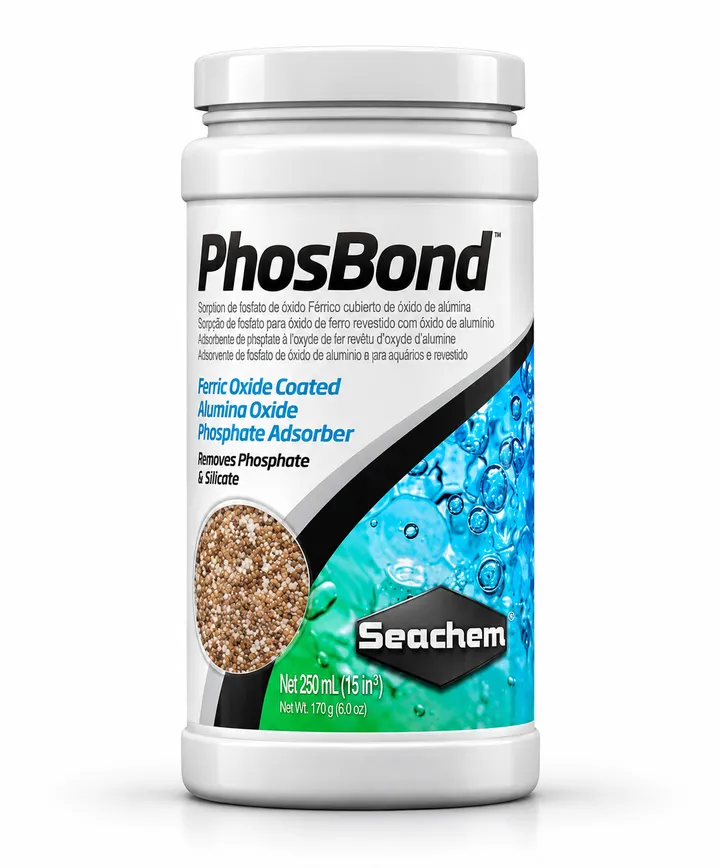
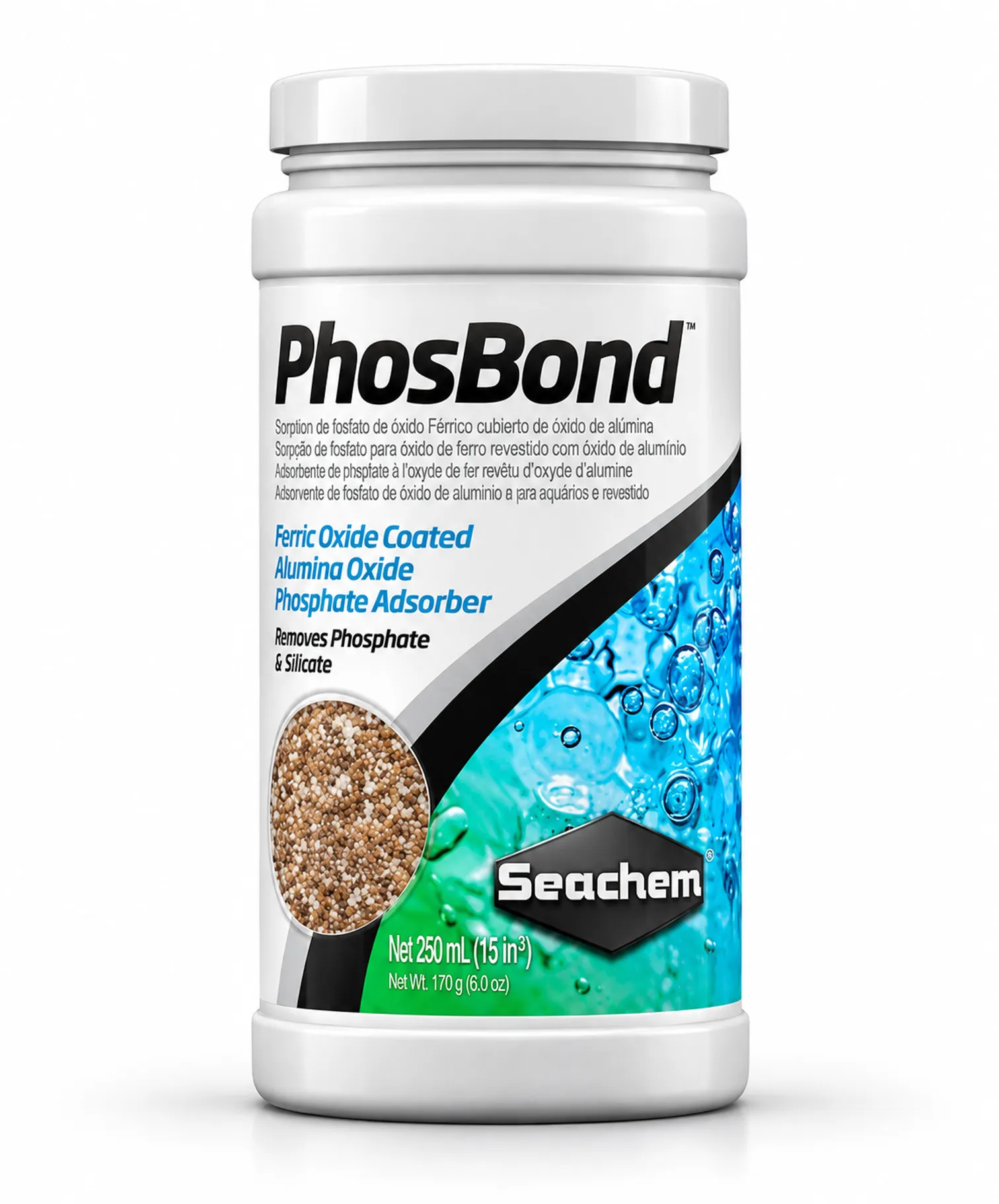
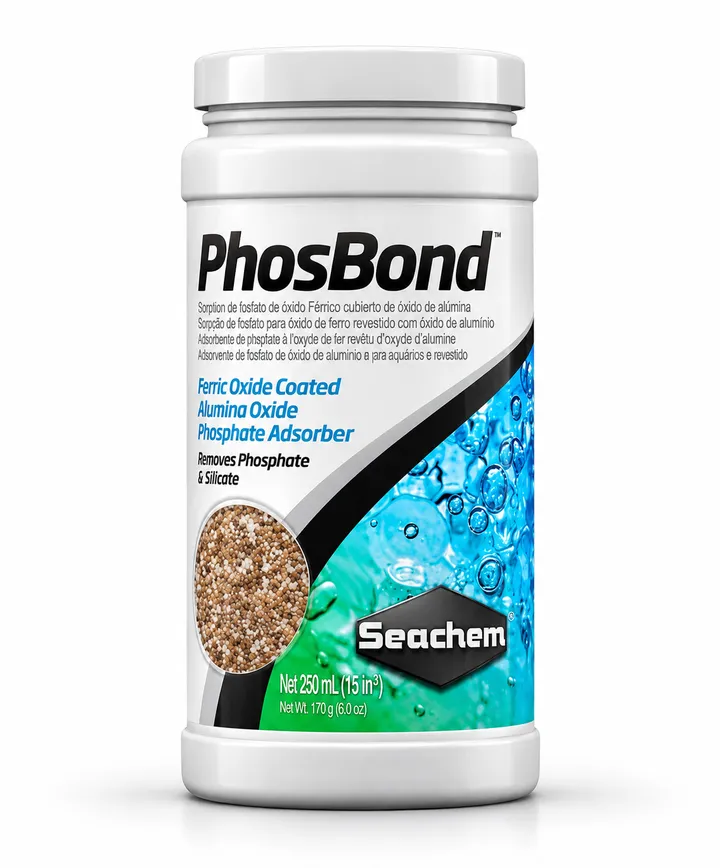
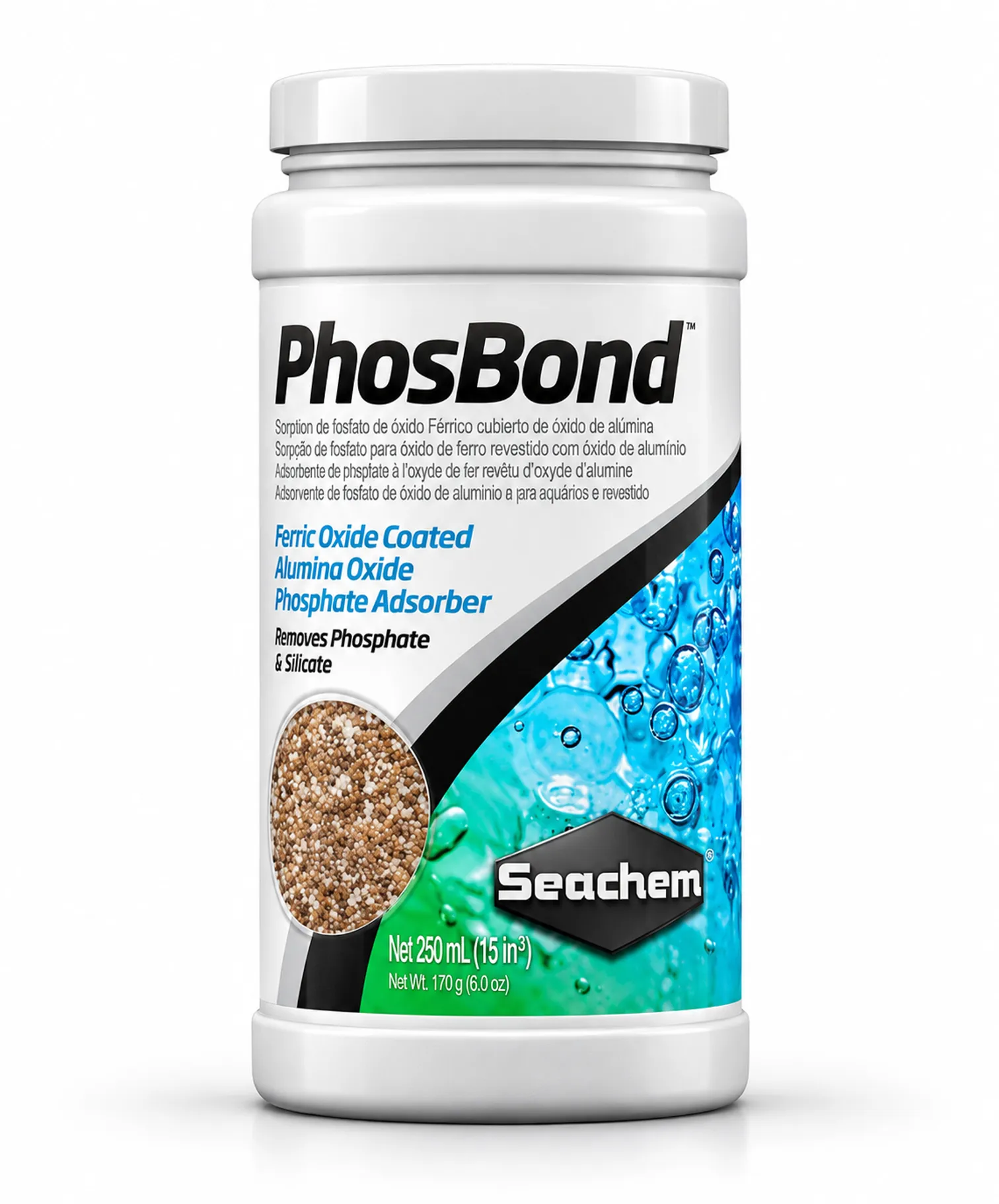
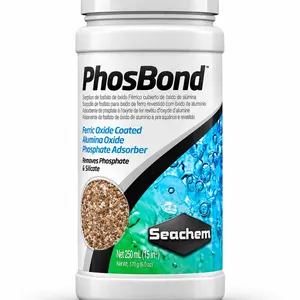
Seachem Filtration PhosBond 250ml
Sizes:
Secure Checkout
Free Shipping*
Expert Support
Quality Guaranteed
7-Day Easy Returns. View Policy
Product Details
Description
Seachem PhosBond – Premium Aquarium Phosphate & Silicate Remover | Ferric Oxide-Coated Aluminium Oxide Filter Media
Product Description
Maintain cleaner, healthier, and better-balanced aquarium water with Seachem PhosBond, a premium aquarium phosphate and silicate remover designed to rapidly reduce unwanted dissolved nutrients in freshwater, marine, and reef aquarium systems.
Buy Seachem PhosBond Online in India at Aquatik Angels – Your Trusted Online Aquarium & Aquascaping Store in India and Chennai.
Manufactured by Seachem Laboratories, PhosBond combines the phosphate-removing properties of ferric oxide and aluminium oxide into one advanced hybrid filtration material.
Its specialized ferric oxide-coated aluminium oxide structure provides excellent phosphate and silicate adsorption, combining high porosity, extensive surface area, and strong physical durability.
Excess phosphate in aquarium water can contribute to unwanted algae growth, while dissolved silicate may encourage brown diatom development.
Seachem PhosBond helps manage these unwanted nutrients, supporting improved aquarium water quality and more controlled aquatic conditions.
Its advanced hybrid media rapidly binds dissolved phosphate and silicate without releasing previously adsorbed substances back into aquarium water during normal use.
The filtration media's strong physical structure also helps resist breakdown from normal mechanical stress, making it suitable for appropriate high-flow aquarium filtration systems.
PhosBond is particularly useful for marine fish aquariums, coral reef tanks, freshwater aquariums, aquarium sump filtration systems, canister filters, and professional aquarium maintenance.
Whether you're maintaining a saltwater reef aquarium, freshwater community tank, or customized aquarium filtration installation, Seachem PhosBond offers an effective solution for phosphate and silicate management.
Key Features & Benefits
1. Rapid Phosphate Removal
Effectively adsorbs excess dissolved phosphate from aquarium water, supporting controlled nutrient management.
2. Powerful Silicate Removal
Helps reduce dissolved silicate associated with unwanted brown diatom development.
3. Advanced Hybrid Filtration Technology
Combines ferric oxide and aluminium oxide adsorption properties in one specialized material.
4. High Phosphate-Binding Capacity
Provides effective phosphate removal through its high-capacity adsorption structure.
5. Highly Porous Filtration Media
Offers extensive active surfaces for dissolved phosphate and silicate adsorption.
6. Supports Algae Management
Helps reduce excess phosphate that can contribute to nuisance algae growth.
7. Supports Brown Diatom Management
Helps control silicate availability associated with brown diatom development.
8. Strong Physical Structure
Resists breakdown under appropriate aquarium filtration conditions.
9. Irreversible Phosphate Binding
Retains adsorbed phosphate without releasing it back into aquarium water during normal operation.
10. Effective Silicate Binding
Captures dissolved silicate and retains it within the filtration media.
11. Marine Aquarium Compatible
Suitable for saltwater fish aquarium nutrient management.
12. Reef Aquarium Compatible
Supports phosphate control in coral reef systems when used appropriately.
13. Freshwater Aquarium Compatible
Suitable for freshwater aquariums requiring phosphate and silicate reduction.
14. Aquarium Sump Compatible
Can be installed inside suitable freshwater and marine aquarium sump filtration chambers.
15. Canister Filter Compatible
Works in compatible chemical filtration compartments.
16. Convenient Filter Installation
Can be placed inside an appropriate aquarium filter media bag.
17. No Phosphate Leaching
Previously adsorbed phosphate is not released back into aquarium water under normal conditions.
18. Flexible Maintenance
Media can remain in the filtration system until its adsorption capacity becomes exhausted.
19. Supports Aquarium Water Quality
Helps maintain suitable phosphate and silicate concentrations.
20. Professional Aquarium Filtration
Suitable for marine aquarium specialists, aquascapers, aquarium hobbyists, and maintenance professionals.
Technical Specifications
| Specification | Details |
|---|---|
| Brand | Seachem |
| Manufacturer | Seachem Laboratories |
| Product Name | PhosBond |
| Product Category | Aquarium Chemical Filtration Media |
| Filtration Type | Chemical Adsorption |
| Media Material | Ferric Oxide-Coated Aluminium Oxide |
| Primary Function | Phosphate Removal |
| Secondary Function | Silicate Removal |
| Phosphate-Binding Capacity | Approximately 1.19mg PO₄ per gram of media |
| Marine Dosage | 60ml per 200 Litres |
| Freshwater Dosage | 60ml per 400 Litres |
| Initial Testing Period | 4 Days |
| Freshwater Compatibility | Yes |
| Marine Compatibility | Yes |
| Reef Aquarium Compatibility | Yes |
| Regenerable | No |
| Recommended Filter Installation | Suitable Filter Media Bag |
| Compatible Filtration | Canister Filters, Media Chambers, Box Filters & Trickle Filters |
| Tumbling Media Reactor | Not Recommended |
Understanding Phosphate in Aquariums
Phosphate is a naturally occurring nutrient that enters aquariums through various sources.
Common phosphate sources include:
-
Fish food
-
Uneaten food particles
-
Fish waste
-
Decaying aquatic plants
-
Decomposing organic materials
-
Tap water containing phosphate
-
Certain aquarium additives
-
Organic deposits within substrates
Phosphate is an essential nutrient for living organisms. However, excessive concentrations can contribute to unwanted algae growth and nutrient imbalance.
In marine reef aquariums, maintaining appropriate phosphate concentrations is important for coral health and nutrient management.
Seachem PhosBond helps remove excess dissolved phosphate using advanced chemical adsorption technology.
Its ferric oxide-coated aluminium oxide structure binds phosphate as aquarium water flows through the filtration media.
Important: The objective is to maintain appropriate phosphate levels, not automatically eliminate all phosphate. The desired concentration depends on aquarium livestock and system requirements.
Understanding Silicate in Aquariums
Silicate can enter aquarium water through:
-
Tap water
-
Source water
-
Certain aquarium substrates
-
Some decorations and mineral-containing materials
-
Dissolved minerals
Silicate availability may contribute to brown diatom development.
Diatoms commonly appear as brown deposits on aquarium glass, rocks, decorations, and substrate surfaces.
They are especially common in newly established aquarium systems.
Seachem PhosBond helps reduce dissolved silicate, supporting nutrient management and aquarium maintenance practices intended to control unwanted diatoms.
How Seachem PhosBond Works
Stage 1 – Aquarium Water Enters the Filter
Aquarium water circulates into a canister filter, sump chamber, or suitable chemical filtration compartment.
Stage 2 – Water Passes Through PhosBond
Water flows through the highly porous hybrid filtration media.
Stage 3 – Phosphate Is Adsorbed
Dissolved phosphate binds to active surfaces within the filtration material.
Stage 4 – Silicate Is Adsorbed
The media also captures dissolved silicate.
Stage 5 – Bound Nutrients Remain in the Media
Phosphate and silicate remain adsorbed during normal aquarium filtration.
Stage 6 – Filtered Water Returns to the Aquarium
Water continues through the filtration system and circulates back into the aquarium.
Stage 7 – Nutrient Concentrations Are Monitored
Phosphate or silicate test kits help determine filtration effectiveness.
Stage 8 – Exhausted Media Is Replaced
Once the filtration media becomes exhausted, replace it with fresh PhosBond.
Manufacturer-Recommended Dosage
Marine Aquariums: Use 60ml per 200 litres of aquarium water.
Freshwater Aquariums: Use 60ml per 400 litres of aquarium water.
Actual filtration requirements depend on:
-
Aquarium water volume
-
Existing phosphate concentration
-
Silicate concentration
-
Feeding quantity
-
Fish stocking density
-
Organic waste accumulation
-
Water circulation
-
Aquarium maintenance frequency
Seachem recommends testing phosphate or silicate after approximately four days.
If the substance being removed has not decreased to approximately 0.02mg/L, replace the media according to the manufacturer's directions.
Otherwise, PhosBond may remain in the filtration system until the relevant nutrient concentration begins rising again.
Important: Seachem's recommended test threshold is not a universal target for every aquarium. Avoid excessively low phosphate, particularly in coral reef and planted aquarium systems.
How to Use Seachem PhosBond
Step 1 – Determine Aquarium Water Volume
Calculate the approximate actual water volume of the aquarium and connected filtration system.
Step 2 – Test Phosphate or Silicate
Measure the existing concentration using a suitable aquarium test kit.
Step 3 – Measure the Required Quantity
Use Seachem's dosage recommendations to determine the required amount.
Step 4 – Prepare a Filter Media Bag
Place PhosBond inside a suitable aquarium filtration bag, such as Seachem The Bag.
Step 5 – Rinse Before Installation
Rinse PhosBond thoroughly before placing it inside the aquarium filtration system.
Step 6 – Install Inside the Filter
Position the media inside a canister filter, media chamber, box filter, sump chamber, or suitable trickle filter.
Step 7 – Maintain Effective Water Circulation
Ensure aquarium water passes efficiently through the media.
Avoid allowing the particles to tumble or grind against each other.
Step 8 – Operate the Filtration System
Run the aquarium filtration system normally.
Step 9 – Test After Four Days
Check phosphate or silicate concentration to evaluate filtration performance.
Step 10 – Replace When Exhausted
Replace PhosBond when its adsorption capacity is exhausted or when the target nutrient concentration begins increasing.
How Long Does Seachem PhosBond Last?
PhosBond does not have a fixed replacement interval suitable for every aquarium.
Its working life depends on the amount of dissolved phosphate and silicate present.
In aquariums with very high phosphate concentrations, the media may become exhausted within approximately four to five days.
Where nutrient concentrations are already controlled, PhosBond may remain effective for longer.
Factors affecting its working life include:
-
Existing phosphate concentration
-
Dissolved silicate concentration
-
Aquarium water volume
-
Feeding practices
-
Fish stocking density
-
Water circulation
-
Frequency of water changes
Seachem recommends using smaller quantities continuously rather than introducing excessive amounts intermittently.
Regular phosphate or silicate testing is the most reliable way to determine when the media needs replacement.
Does Seachem PhosBond Release Phosphate Back Into Water?
No.
According to Seachem, PhosBond does not release previously adsorbed phosphate or silicate back into aquarium water during normal use.
The media can be removed, dried, and returned to filtration service if it has not reached its adsorption capacity.
However, drying does not regenerate exhausted filtration media.
Once its capacity is exhausted, PhosBond should be replaced.
Can Seachem PhosBond Be Regenerated?
No.
Seachem PhosBond is not intended for regeneration.
The phosphate and silicate adsorption process is effectively irreversible under normal aquarium conditions.
Once the media becomes exhausted, replace it with fresh filtration media.
Ideal Applications
Marine Aquarium Filtration
Helps reduce excess phosphate and silicate in marine fish aquarium systems.
Reef Aquarium Nutrient Management
Supports controlled phosphate management for reef aquariums when used carefully.
Freshwater Aquarium Filtration
Suitable for freshwater aquariums where excessive phosphate or silicate requires management.
Aquarium Silicate Removal
Helps reduce dissolved silicate in aquarium water.
Brown Diatom Management
Supports nutrient management practices intended to control diatom growth.
Aquarium Algae Management
Helps reduce excess phosphate associated with nuisance algae conditions.
Aquarium Canister Filters
Suitable for compatible chemical filtration media compartments.
Aquarium Sump Filtration
Can be placed inside suitable freshwater or marine sump chambers.
Aquarium Box Filters
Suitable for compatible aquarium box filter configurations.
Aquarium Trickle Filters
May be used in appropriate high-flow filtration areas.
Professional Aquarium Maintenance
Useful for aquarium servicing and phosphate management programs.
Important Precautions
Avoid Excessive Phosphate Reduction
Phosphate is an important nutrient in aquarium ecosystems.
Reducing phosphate too rapidly or excessively may affect sensitive corals and other organisms.
Use Carefully in Reef Aquariums
Regularly monitor phosphate concentrations and avoid unnecessary overdosing.
Monitor Planted Aquarium Nutrients
Aquatic plants require phosphate for healthy growth.
Use phosphate-removing media only when nutrient reduction is necessary.
Do Not Allow Media to Tumble
Seachem does not recommend tumbling PhosBond in a media reactor because friction can cause the media to produce dust.
Rinse Before Installation
Always rinse the media according to the manufacturer's instructions.
Replace Exhausted Media
PhosBond is not regenerable.
Maintain Biological Filtration
PhosBond removes phosphate and silicate but does not replace beneficial bacterial filtration.
Continue Routine Water Changes
Regular aquarium water changes and maintenance remain essential.
Frequently Asked Questions
What is Seachem PhosBond used for?
Seachem PhosBond is an aquarium chemical filtration media designed to rapidly remove dissolved phosphate and silicate.
Does Seachem PhosBond remove phosphate?
Yes. It adsorbs dissolved phosphate through its hybrid filtration material.
Does PhosBond remove silicate?
Yes. It is designed to remove dissolved silicate from aquarium water.
What is Seachem PhosBond made from?
It consists of ferric oxide-coated aluminium oxide filtration media.
Is PhosBond suitable for marine aquariums?
Yes. It is designed for marine and freshwater filtration systems.
Is PhosBond suitable for reef aquariums?
Yes, when used carefully and with appropriate phosphate monitoring.
Can PhosBond be used in freshwater aquariums?
Yes. It is suitable for freshwater aquarium phosphate and silicate reduction.
Can PhosBond help manage algae?
Yes. By reducing excess phosphate, it can help manage nutrient conditions associated with unwanted algae growth.
Does PhosBond help control brown diatoms?
Yes. It removes silicate that may contribute to diatom development.
What is the recommended dosage for marine aquariums?
Seachem recommends 60ml for every 200 litres.
What is the recommended dosage for freshwater aquariums?
Seachem recommends 60ml for every 400 litres.
How quickly does PhosBond work?
It is designed for rapid phosphate and silicate removal. Seachem recommends testing after four days.
How long does PhosBond last?
Its lifespan depends on phosphate and silicate concentrations. Media can become exhausted within several days in heavily contaminated systems.
How do I know when PhosBond is exhausted?
Test phosphate or silicate regularly. Rising concentrations may indicate that replacement is required.
Can PhosBond be regenerated?
No. Exhausted PhosBond should be replaced.
Can PhosBond release phosphate back into the aquarium?
Seachem states that previously adsorbed phosphate is not released during normal use.
Can PhosBond be used in a canister filter?
Yes. It is suitable for compatible canister filter compartments.
Can PhosBond be used in an aquarium sump?
Yes. It can be installed inside suitable sump filtration chambers.
Can PhosBond be used in a media reactor?
Seachem does not recommend tumbling PhosBond because friction may generate dust.
Does PhosBond require a filter media bag?
A suitable filter media bag is recommended.
Should PhosBond be rinsed before use?
Yes. Seachem recommends rinsing before installation.
Can PhosBond be left inside the aquarium filter?
Yes. It may remain in the filtration system until its capacity becomes exhausted.
Can PhosBond remove ammonia?
No. PhosBond is designed for phosphate and silicate removal.
Can PhosBond remove nitrate?
No. It is not a nitrate-removing filtration media.
Can PhosBond replace biological filtration?
No. Biological filtration remains essential for aquarium nitrogen-cycle management.
Can PhosBond replace aquarium water changes?
No. Regular aquarium water changes and maintenance are still required.
Is PhosBond suitable for planted aquariums?
It may be used where phosphate reduction is necessary, but phosphate is an essential nutrient for aquatic plants.
Is PhosBond safe for corals?
Seachem reports that the media is suitable for reef aquariums when used under appropriate conditions. Avoid overdosing or unnecessarily rapid phosphate reduction.
Storage & Handling
-
Store unused media in a cool, dry location.
-
Keep the container securely closed.
-
Keep away from children and pets.
-
Avoid inhaling filtration media dust.
-
Do not ingest.
-
Rinse before aquarium installation.
-
Use a suitable filter media bag.
-
Avoid media tumbling or grinding.
-
Monitor phosphate and silicate concentrations.
-
Replace exhausted media.
-
Follow manufacturer instructions.
Package Contents
Seachem PhosBond Aquarium Phosphate & Silicate Remover – One Container of the Selected Variant
Filter bags and additional filtration accessories are included only when specified in the product listing.
Why Choose Seachem PhosBond?
Seachem PhosBond combines ferric oxide and aluminium oxide adsorption properties to provide high-capacity phosphate and silicate removal.
Its highly porous structure, extensive adsorption surface area, and strong physical durability make it suitable for freshwater, marine, and reef aquarium filtration.
The media helps manage excess phosphate and silicate without releasing bound nutrients during normal aquarium use.
For aquarium owners seeking controlled phosphate management, silicate reduction, and professional chemical filtration, Seachem PhosBond offers an effective and practical solution.
Why Buy Seachem PhosBond from Aquatik Angels?
Aquatik Angels is a specialized aquarium and aquascaping store located in Nolambur, Mogappair, Chennai, Tamil Nadu, serving aquarium enthusiasts, aquascapers, and marine aquarium hobbyists across India.
We specialize in:
-
Marine aquarium installations
-
Reef aquarium filtration
-
Freshwater aquarium systems
-
Planted aquarium aquascaping
-
Customized aquarium tanks
-
Aquarium sump filtration
-
Aquarium canister filters
-
Terrarium and paludarium setups
-
Professional aquarium installation and maintenance
Explore our collection of Seachem PhosBond, Seachem PhosGuard, Seachem PhosNet, Seachem Purigen, aquarium phosphate removers, silicate-removing filtration media, chemical filtration products, canister filters, and premium marine aquarium accessories.
Buy Seachem PhosBond Online in India
Looking for Seachem PhosBond Price in India, Buy Seachem PhosBond Online India, Seachem PhosBond Chennai, Aquarium Phosphate Remover India, or Marine Aquarium Silicate Remover Chennai?
Shop Seachem PhosBond at Aquatik Angels, your online destination for marine aquarium filtration, reef aquarium maintenance, freshwater aquarium supplies, phosphate-removing media, and professional aquascaping equipment.
Visit our aquarium store in Nolambur, Mogappair, Chennai, Tamil Nadu, or order online with Pan-India Shipping to serviceable destinations including Chennai, Bengaluru, Hyderabad, Mumbai, Pune, Delhi, Coimbatore, Kochi, and other locations across India.
Enjoy Free Delivery on eligible orders.
Shop Online: www.Aquatikangels.com
Aquatik Angels – A Touch of Nature Indoors.
Best Online Aquarium Shopping in India and Chennai.
Recommended Products
Customer Reviews


NO REVIEWS FOUND